 English▼



- 메일 주소 : David@tmaxcn.com
- 메일 주소 : Davidtmaxcn@gmail.com
- : No. 39, Xinchang Road, Xinyang, Haicang Dist., Xiamen, Fujian, China (Mainland)
블로그
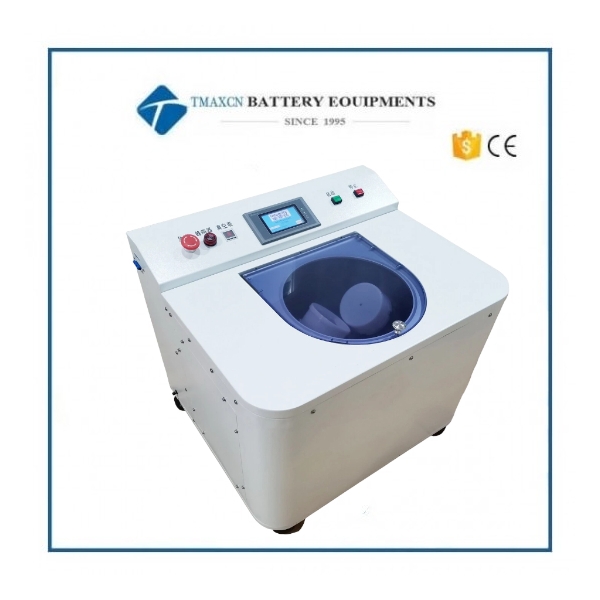
Centrifugal Mixer
April 7,2026.
Xiamen Tmax Battery Equipments Limited was set up as a manufacturer in 1995, dealing with lithium battery equipments, technology, etc. We have total manufacturing facilities of around 200000 square foot and more than 230 staff. Owning a group of experie-nced engineers and staffs, we can bring you not only reliable products and technology, but also excellent services and real value you will expect and enjoy.
A centrifugal mixer is a specialized mixing device that utilizes centrifugal force to blend materials with high efficiency and precision. This type of mixer is widely used in industries such as pharmaceuticals, chemicals, food processing, ceramics, electronics, and construction due to its ability to achieve uniform mixing even for challenging materials like powders, slurries, pastes, and suspensions.
In this article, we will explore the principles, types, applications, advantages, challenges, and innovations associated with centrifugal mixers.
●Principles of Operation
1. Centrifugal Force
The mixer rotates at high speeds, generating centrifugal force that moves materials outward from the center.
This force ensures thorough mixing by continuously redistributing particles and liquids.
2. Mixing Mechanism
Depending on the design, the mixer may use paddles, blades, or rotating containers to combine materials.
The highspeed rotation enhances dispersion and reduces the formation of lumps or agglomerates.
3. Vacuum Option (Optional)
Some centrifugal mixers operate under vacuum conditions to remove air bubbles and improve homogeneity.
This is particularly useful for sensitive materials like adhesives, resins, and electronic pastes.
4. Temperature Control
Many centrifugal mixers include heating or cooling systems to maintain optimal conditions for specific materials.
●Types of Centrifugal Mixers
1. PlanetaryCentrifugal Mixers
Combine planetary motion with centrifugal force for superior mixing performance.
Ideal for viscous materials like silicones, epoxies, and adhesives.
2. Horizontal Centrifugal Mixers
Use horizontal rotation to mix powders, granules, or dry materials evenly.
Commonly used in pharmaceuticals and food processing.
3. Vertical Centrifugal Mixers
Employ vertical rotation with paddles or blades to blend liquids, slurries, or pastes.
Suitable for coatings, inks, and paints.
4. DoubleCone Centrifugal Mixers
Feature two cones connected at their bases, rotating to ensure thorough mixing.
Used for dry powders and granular materials.
5. VShaped Centrifugal Mixers
Have a Vshaped chamber that rotates to mix materials gently but effectively.
Ideal for fragile or heatsensitive materials.
●Applications of Centrifugal Mixers
1. Pharmaceuticals
Blending active pharmaceutical ingredients (APIs) with excipients for drug formulations.
Ensuring uniform distribution of components in tablets, capsules, and powders.
2. Chemicals
Producing homogeneous mixtures of chemicals for fertilizers, detergents, and industrial products.
3. Food Industry
Mixing ingredients for sauces, spreads, dough, and other food products.
Achieving consistent texture and flavor.
4. Ceramics
Preparing ceramic slurries and pastes for shaping and firing processes.
5. Electronics
Creating precise mixtures for solder pastes, conductive inks, and encapsulants.
6. Construction Materials
Mixing mortars, grouts, and concrete additives for improved performance.
7. Adhesives and Sealants
Ensuring bubblefree formulations for consistent bonding and sealing.
●Advantages of Centrifugal Mixers
1. High Efficiency
Rapid mixing due to the highspeed rotation and centrifugal force.
2. Uniformity
Achieves excellent homogeneity, reducing the risk of segregation or uneven distribution.
3. Versatility
Compatible with a wide range of materials, from lowviscosity liquids to highviscosity pastes.
4. Scalability
Available in laboratoryscale, pilotscale, and industrialscale models.
5. Reduced Agglomeration
Minimizes the formation of lumps or clumps during mixing.
6. Customizable Speed
Adjustable rotation speeds to suit different materials and applications.
7. Improved Safety
Enclosed designs reduce exposure to hazardous materials and minimize spillage.
●Challenges in Using Centrifugal Mixers
1. Cost
High initial investment due to the complexity of highspeed rotating mechanisms.
2. Maintenance
Requires regular inspection and lubrication of moving parts to prevent wear and tear.
3. Material Sensitivity
Some materials may degrade or react under high shear forces, requiring careful process control.
4. Noise and Vibration
Highspeed rotation can generate noise and vibrations, necessitating soundproofing and isolation measures.
5. Cycle Time
Loading and unloading the mixer can add to the overall processing time.
6. Skill Requirement
Operators need training to optimize settings for different materials and applications.
●Innovations in Centrifugal Mixer Technology
To address challenges and enhance performance, manufacturers are developing advanced solutions:
1. Smart Monitoring Systems
Incorporating sensors and AI for realtime monitoring of mixing parameters and quality control.
2. Energy Efficiency
Designing mixers with lower power consumption and optimized motor systems.
3. EcoFriendly Designs
Reducing waste and emissions through improved cleaning and recycling processes.
4. Advanced Materials
Using corrosionresistant and wearresistant materials for longer equipment lifespan.
5. Modular Systems
Offering scalable and customizable designs to adapt to different production needs.
●The Future of Centrifugal Mixers
As industries demand higherquality materials and more sustainable processes, centrifugal mixers will continue to evolve. Key trends shaping the future include:
1. Increased Precision
Development of nanoscale mixing techniques for advanced materials.
2. Focus on Sustainability
Ecofriendly designs and processes to reduce environmental impact.
3. Integration with Emerging Technologies
Combining centrifugal mixers with AI, IoT, and robotics for smarter and more efficient production.
4. Global Standards Compliance
Ensuring compatibility with evolving international regulations for safety and performance.
5. Expansion into New Markets
Adapting centrifugal mixers for emerging industries like aerospace, renewable energy, and wearable technology.
●Tips for Selecting the Right Centrifugal Mixer
1. Determine Your Needs
Consider the type of materials you will be mixing, batch size, and desired consistency.
2. Evaluate Features
Look for adjustable speed, temperature control, and vacuum capabilities to suit your application.
3. Check Brand Reputation
Choose a reputable manufacturer with good customer support and warranty options.
4. Compare Prices
Obtain quotes from multiple suppliers to ensure you get the best value for your budget.
5. Consider LongTerm Costs
Factor in operating costs, maintenance, and potential upgrades when making your decision.
●Conclusion
Centrifugal mixers are powerful tools for achieving highquality, uniform mixtures across various industries. Their ability to handle challenging materials with precision and efficiency makes them indispensable in applications where consistency and performance are critical. As technology advances, centrifugal mixers will continue to play a key role in driving innovation in material science and manufacturing.
What excites you most about the advancements in centrifugal mixer technology? Share your thoughts below! Together, let’s explore how these innovative tools can shape the future of material processing and beyond.
 +86 13174506016
 David@tmaxcn.com

