 English▼



- 메일 주소 : David@tmaxcn.com
- 메일 주소 : Davidtmaxcn@gmail.com
- : No. 39, Xinchang Road, Xinyang, Haicang Dist., Xiamen, Fujian, China (Mainland)
블로그
Battery Lab Machine
October 14,2025.
Xiamen Tmax Battery Equipments Limited was set up as a manufacturer in 1995, dealing with lithium battery equipments, technology, etc. We have total manufacturing facilities of around 200000 square foot and more than 230 staff. Owning a group of experie-nced engineers and staffs, we can bring you not only reliable products and technology, but also excellent services and real value you will expect and enjoy.
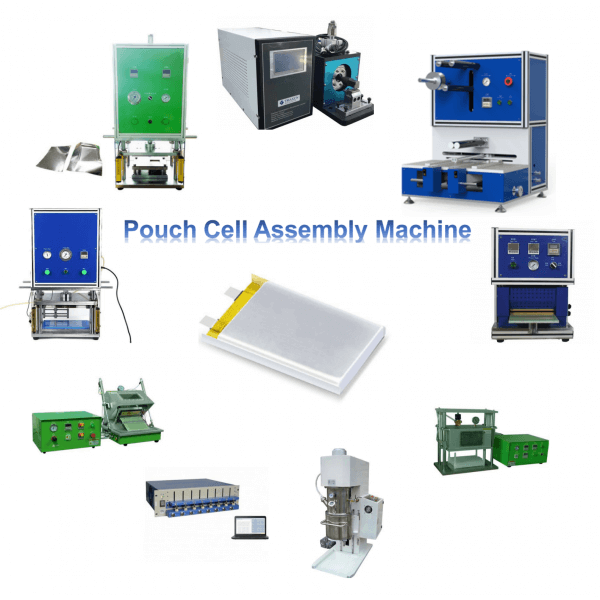
A battery lab machine is a specialized piece of equipment designed for use in research laboratories to test, analyze, and prototype battery technologies. These machines are critical tools for scientists and engineers working on the development of advanced battery chemistries, materials, and designs. They enable precise control over experimental conditions, accurate data collection, and reliable performance evaluation.
In this article, we will explore the types, functionalities, advantages, challenges, and innovations driving the evolution of battery lab machines.
●Types of Battery Lab Machines
Battery lab machines can be categorized based on their specific applications in research and testing:
1. Electrode Coating Machines
Function: Apply active material slurries onto current collector foils (aluminum for cathodes, copper for anodes) for smallscale prototyping.
Examples:
Laboratoryscale slotdie coating machines.
Doctor blade coaters for manual or semiautomated operation.
2. Calendering Machines
Function: Compact coated electrodes to achieve desired density and porosity in laboratory settings.
Examples:
Rolltoroll calendering systems with adjustable pressure and speed.
3. Stacking/Winding Machines
Function: Assemble electrodes and separators into stacked or wound configurations for coin cells, pouch cells, or cylindrical cells.
Examples:
Manual stacking tools for coin cell fabrication.
Semiautomated winding machines for cylindrical cell prototypes.
4. Coin Cell Assembly Machines
Function: Fabricate coin cells for electrochemical testing.
Examples:
Coin cell crimping machines.
Electrolyte filling stations for controlled dispensing.
5. Cycling and Testing Machines
Function: Perform chargedischarge cycles and evaluate battery performance under various conditions.
Examples:
Potentiostats/galvanostats for cyclic voltammetry and electrochemical impedance spectroscopy (EIS).
Battery cyclers for longterm performance testing.
6. Environmental Chambers
Function: Simulate different temperature and humidity conditions to study battery behavior.
Examples:
Temperaturecontrolled ovens.
Humidity chambers for studying moisture effects.
7. Material Characterization Instruments
Function: Analyze the physical and chemical properties of battery materials.
Examples:
Scanning electron microscopes (SEM) for surface morphology analysis.
Xray diffraction (XRD) systems for crystal structure studies.
●Functionalities of Battery Lab Machines
1. Precision Control:
Ensure accurate application of materials, assembly processes, and testing conditions.
2. Customizability:
Adapt to specific experimental requirements, such as varying electrode thicknesses or electrolyte compositions.
3. Data Collection:
Capture detailed performance metrics, including capacity, internal resistance, and thermal stability.
4. Safety Features:
Protect operators from hazardous materials and highvoltage components.
5. Integration:
Connect seamlessly with other lab equipment for comprehensive analysis.
●Advantages of Battery Lab Machines
1. Accelerated Prototyping:
Enable rapid fabrication and testing of new battery designs.
2. Cost Efficiency:
Reduce material waste and streamline experimentation through precise control.
3. Improved Accuracy:
Provide consistent results by minimizing human error.
4. Versatility:
Support a wide range of battery chemistries, including lithiumion, sodiumion, solidstate, and beyond.
5. Scalability:
Bridge the gap between labscale experiments and industrialscale production.
●Challenges in Battery Lab Machines
1. Complexity:
Advanced machines require skilled operators and maintenance personnel.
2. High Costs:
Highperformance instruments often come with significant upfront investment.
3. Limited Throughput:
Labscale machines are not designed for mass production, limiting their output.
4. Compatibility Issues:
Ensuring seamless integration with other lab equipment can be challenging.
5. Material Handling:
Safely handling sensitive materials like solid electrolytes or highly reactive compounds requires specialized techniques.
To address these challenges and enhance research capabilities, manufacturers are incorporating cuttingedge technologies:
1. AI and Automation:
AIdriven systems optimize experimental parameters and automate repetitive tasks.
2. RealTime Monitoring:
Integrated sensors provide continuous feedback on critical variables like temperature, pressure, and voltage.
3. Modular Design:
Flexible systems allow researchers to customize machines for specific experiments.
4. Sustainability Features:
Ecofriendly practices and recycling capabilities minimize waste and energy consumption.
5. Advanced Analytics:
Big data and machine learning tools analyze large datasets to uncover trends and improve battery performance.
●Applications of Battery Lab Machines
Battery lab machines are used in various research areas, including:
1. Material Development:
Study novel electrode materials, electrolytes, and binders.
2. Cell Design Optimization:
Test different geometries, separators, and packaging solutions.
3. Performance Evaluation:
Assess capacity, cycle life, safety, and thermal stability under various conditions.
4. Failure Analysis:
Investigate degradation mechanisms and identify improvement opportunities.
5. Emerging Technologies:
Prototype nextgeneration batteries, such as solidstate, multivalent ion, and redox flow systems.
●The Future of Battery Lab Machines
As the demand for advanced energy storage solutions grows, battery lab machines will continue to evolve. Key trends shaping the future include:
1. Increased Automation:
Fully autonomous systems will enhance productivity and reduce operator intervention.
2. Customization Options:
Modular designs will allow researchers to tailor machines for specific materials and chemistries.
3. Focus on Sustainability:
Ecofriendly practices and recycling capabilities will become integral parts of future systems.
4. Integration with Emerging Technologies:
Solidstate batteries, flexible electronics, and autonomous systems will drive new innovations in machine design.
5. Smart Laboratories:
IoTenabled systems will leverage big data and AI to optimize experiments, reduce waste, and accelerate discoveries.
●Conclusion
Battery lab machines are indispensable tools for advancing battery technology, enabling researchers to explore new materials, designs, and applications. Their ability to provide precise control, accurate data, and reliable performance makes them essential for driving innovation in the energy storage sector.
What excites you most about the role of battery lab machines in shaping the future of battery research? Share your thoughts below! Together, let’s explore how these tools can unlock the potential of nextgeneration energy storage solutions.
 +86 13174506016
 David@tmaxcn.com

